STRUCTURE
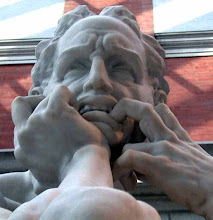
People sometimes tell me I’m a "people person." I laugh to myself whenever they do. I understand their reasons for saying so. I can be garrulous. But they don’t know how things really run inside of me. There are different levels inside of me. When I say I am a structured person, I don’t mean that I do things in an orderly manner. No. When I use the word structure in this way, I am referring to a dilapidated house of wooden crates and planks, warped and molded and glued together, melded by twisted, rusty nails, oversized bolts. My inner rooms are an amalgamation, a ramshackle clubhouse where people hide inside whatever room they choose.
One room is all purple, light and dark, and there are bowls filled with little bits of paper laced with drugs. These bowls are placed politely on doilied tabletops as if they held sweet candies wrapped in cellophanes. There are windows in that room, and trees outside, a park where children laugh and cry and shout.
In another room there is no light. This is where the half-people gravitate, those half-people whose transitional floors gave way too soon, planks crumbling beneath their feet before they had time to cross from adolescence to adulthood. So they fall into that gap, one that opens somewhere between a pimpled, glad invisibility and the somber space below, a dark space where they land, bodies thumping, among the shriveled skins of dried up selves piled around the room like buffalo hides.
There are rooms where people die too early and others die too late. Rooms full of sadists and idealists. Rooms where pretending never stops. Most pleasant are the kitchens, or the rooms with the overstuffed chairs. Some have greeting spaces and staircases. I have built this house inside of me.
It seems that I’m involved in something new, though nothing yet is clear. One thing not yet clear is whether this flimsy house will be demolished, or if I’m only adding on another room. There are levels here where what you see is seemingly what you get. And there remain too, sublunary hiding spaces where people (people like me at least) really live. For a long time I’ve been thinking that once a room is built, it’s built.
I’ve been trying to exercise too. It’s not my nature. I’m doing it because the world "out there" requires physical continuity. I’ve never been physical. When I was a child I could not run fast, could not skate gracefully. I lacked balance. Others seemed born with it.
When I was capable of real sleep, I’d have this recurring series of dreams based on real-life events. The dreams are set in the same summer I learned to ride a bicycle. My father had rented us a bungalow near the beach. That summer stays with me even without dreams. I’d fish for minnows in the bay. I'd stuff bread inside a milk bottle that I’d sink, a rope tied round its slender neck. Fat minnows swam in after the bread and I’d pull the bottle in. I discovered places crickets lived, in a nearby vacant lot, all sandy dirt and rocks, tall grasses clumped around.
One morning I walked up on a yellowish ball of larvae swarming alongside the body of a grasshopper who’d been nicked by the tire of a passing car. Apparently, her pregnant belly had popped. There they were, her squirming babies baking on warm tar. I killed a praying mantis too, behind the house that summer, just because. I hear talk about alcoholic behavior. I sometimes wonder if that’s the kind of thing that’s meant.
* * *
In place of sleep comes gravity; gravity and an unqualifiable peace—both fill the air I breathe, here in my bed, sober, detached. And as I put some sober days together I am finding this truth, that the more I let go the more I tap some hidden and sustaining principle. It’s as if when I do my part, taking care of what’s in a day, tilling the garden as it were, of my own hidden life, then whatever it is that’s out there smiles on me; not in a way that “honors” my daily endeavors because I deserve a reward or something—no, more in a way that these two operating principles, letting go and empowerment, simply resonate with one another. At Melrose House they say: “Just do the next right thing.” Not easy for a putz like me, but I’ve been trying it on for size and well, so far so good.
When, at night, I lie in bed I think about the day. That Monday’s instructors conference, or how far I walked, how many bars I counted (Seventeen. This is a college town for sure). I think about writing again, and my first class. My first class; I must admit it went well. Imagine my surprise when she walked in. Her hair was up, and she wore a flowered dress. Stunning really. I held my breath. I’ve got a good poker face.
And her dog—no one in the room batted an eye. Apparently she takes it everywhere she goes, that enormous, broadly muscled beast. Her silences. I’m unsure which is more ominous, the dog or the quiet that surrounds her. Everyone in class but me seemed to already know: she cannot speak.
“Have you ever felt really empty?” She handed me that note a few nights back. I had not recognized them then: the first six words of my first and only book. She’s a fan. How Glea would laugh at that notion. Maybe not. Glea’s the one that got me here after all.
I’m the one who can’t believe I still have fans, but in fact, ninety-nine percent of my student’s are there because they loved the book. My book. I don’t want to screw this up. God, please, don’t let me screw this up. “Let go. Let God,” they say at Melrose House. I close my eyes. Something near to sleep arrives. Gravity. It is quiet.
Thursday, May 29, 2008


Sunday, April 13, 2008
I-i, II-ii, III . . . M M M
Who can calculate which there is more of, water
or blood? Salt and brine, or a sanguinary course
of heat? Sky and cloud, or the oxygen blue pulse,
in-beat of a circuitous and ceaseless rondeau? Source
of poetry, moon-drawn, displaced by the falling prow of
the sky, the rolling wave of the planets, the rush, the lull,
iced and thawed in the history of numbers, seventy beats,
One-one, Two-two, Three . . . a thousand thousand thousand
shark and flesh infested Oceanias. Only a slight hint, a
scent, bare and funereal, of salt-blue, of red that breaches
the shore, the rising tide of all that is, everything in
this one instant, breathing, beating, effervescent baptism,
crumbling mountain of ash and salt, the flood that overtakes,
that sucks the air from our mouths, that liquifies the ground
beneath our feet, broken shells, endless undertow, spume.
or blood? Salt and brine, or a sanguinary course
of heat? Sky and cloud, or the oxygen blue pulse,
in-beat of a circuitous and ceaseless rondeau? Source
of poetry, moon-drawn, displaced by the falling prow of
the sky, the rolling wave of the planets, the rush, the lull,
iced and thawed in the history of numbers, seventy beats,
One-one, Two-two, Three . . . a thousand thousand thousand
shark and flesh infested Oceanias. Only a slight hint, a
scent, bare and funereal, of salt-blue, of red that breaches
the shore, the rising tide of all that is, everything in
this one instant, breathing, beating, effervescent baptism,
crumbling mountain of ash and salt, the flood that overtakes,
that sucks the air from our mouths, that liquifies the ground
beneath our feet, broken shells, endless undertow, spume.
Tuesday, January 15, 2008
This Magic Moment
Wine
Sometimes, they say, you can taste chocolate in the wine, pepper, eucalyptus. Critics suggest wine has "structure." Nonsense. Not to say some wines aren't a bit like turpentine while others flow like silk, but after a bottle (or two or three) why would a palette care one bit? It does not take long for the head to turn to effusion and whimsy. Whenever I drink wine I taste something broken: bone, blood, steel. The wine I drink has teeth in it—my own.
Yes, I know, the accident again. It is always with me, even when I don't notice it until, turning, I catch my reflection in a shop window, or until a certain slant of sun reminds me that all of life is a Nothing's short reprieve—no more, no less.
More than one person has asked, "Did you see a light when it happened?" Emphatically I tell all of them no. No, I say. There was no light at the end of a long tunnel. Nor did I see my own face laughing at any point, my boy-body riding on a park swing at four or five, or myself all pimply faced and a shy high school freshman, a first kiss, a fight with my father. My life did not flash before me. "That's a bad sign," at least one person has informed me.
What I knew at the moment when my face was actually being destroyed, the only thing I knew, was "the real," which I have ever since believed has its own significant power. Nature. Life yes. Death yes. Yes, when the corner of a concrete slab busted through my car window, me suspended upside down, the car overturned and spinning, and when that slab, overcoming the shield of my flailing hands, my arms, as it momentously began to purée (I heard the bones cracking) my cheeks, the only thing offered me was an obliteration not to be denied which, in and of itself, once come, was not as bad as it sounds. Black I tell them, is what I saw. Nothing the thing I experienced first hand. I surrendered. I was overcome. Lights out.
Obviously, I survived. And when I hear this spurious talk of wine, these are the things I think. An empty bottle weighs twice as much as when it had been full. It is filled instead with craving and consequence, with shame and despondency. Someone has said, "Live the life you have imagined." What happens when you look around to see that all the rot and poppycock of your life is in fact the life you have imagined, the one you have built, the one for which you alone are responsible?
* * * * *
The early morning sun was high and bright. Iowa in August is nothing if not hot. "Sorry I'm late," I said to the table full of strangers, a cafeteria-sized room so brimming with light that it washed out the color of the walls. A woman wearing a nametag (I hesitatingly clipped mine on), well spoken, well-dressed—also drenched in light—welcomed everyone, raised excited and expectant hopes for the week. She gestured from behind a thin podium at the front of the room. The sound system recast her voice in metallic, muffled airs.
There were tables all around just like ours, circled with men and women, nametags matching little folded cards on napkins. The man to my left scooted his chair over to let me in. I was dripping. I clipped my nametag to my sweaty shirt and smiled nervously, a little absently even. My thoughts were elsewhere.
I had noticed some curious structures as I walked along my chosen route—hexagonal frames of metal-sheathed, glass-paneled domes, modest semi-circular buildings set like giant buckyballs here and there around the campus lawns, all made of glass. Inside each one, visible at their centers, stood a vertical firebrand, a dark post with a flame on top. I imagined them the red eyes of leviathans peering out of time. Each structure looked identical, fragile, insubstantial.
"Those are the Author's Houses," the man I sat next to told me after the Instructor Orientation had ended. "The few fortunate students admitted to the university are each assigned a house. It's where they'll write their stories. We are very lucky to be here," he said with conviction. His nametag said Bill. "Thanks Bill," I said.
Drawing a handkerchief from my pocket, I patted my brow and turned to my right where an attractive, modestly dressed woman was sipping a glass of water. Her name was Gladys, and I learned she and her husband had moved to Ellenville from New Jersey. "There's an inherent goodness here," she said, nodding, smiling. I did not know how to react to any of it, the orientation, the Author's Houses, inherent goodness. I asked for directions to the men's room and excused myself.
These Author's Houses, as my tablemates had called them, did not appeal to me. Too symmetrical. Too something. Lovely in a decorative kind of way, perhaps. But I thought, looking at myself in the bathroom mirror, give me monsters that burn and howl, not these burnished domes of glass. Small blessing: they'd remain vacant for the summer, save for the red flicker of a dragon's eye in each.
Stepping outside, I once again felt the heat of the sun beat hard against my frame. No matter. I had another meeting to attend, at The Melrose Group. I thought it a simple twelve-step meeting place, but its compass was broader than that. Before the week was up I'd learn that Melrose was actually a halfway house for people struggling with feeling problems of every kind, a self-proclaimed nut house (how they'd laugh about that).
Still, as I had not yet been alerted to that fact, I sat, calmly watching an old man the color of putty scoot his chair in and out under the wooden, candle-lit table that ran the entire length of the room. An incessant tick rippled his cheek just beneath his right eye. A girl with garish blue hair entered carrying a guitar case. The door swung closed behind her. Others arrived, some sedate, some bent as if weighed down by something hung around their necks. A couple of others looked at me and smiled as they passed. One of them said, "Welcome." Her voice rattled like pebbles in the bottom of a coffee can. I nodded at her, attempting a smile.
Melrose House itself was old. The wood-paneled walls and faded carpet set the aged tone, along with stairs that creaked and small, framed prints hung here and there on the walls—a sunny cottage, a vase of flowers. Frayed cushioned chairs abutted low corner tables set with ashtrays. Once white curtains trimmed the windows in lacey patterns and the long wooden table at the center of everything had been set with baskets of paper flowers that were touched by the candlelight.
On the hour a bell chimed. The girl with blue hair read a preamble. A few introductory remarks were spoken by another person, a man in work clothes, his brown hair pulled back behind his ears. Other people around the room took turns sharing. When my turn came I simply introduced myself as an out of towner, grateful to have found a place to come and spend a little time. "I did not have a drink today," I said.
"Hi Michael," several of them responded in unison. "Welcome." The man with the tick on the right side of his face clapped his hands together.
At the end of the meeting everyone stood. We held hands and said a prayer. When we finished, the fellow with the work clothes looked up. "I love this program," he said. "Since I've been coming I've remembered how to screw." A few of us laughed.
"I'm coming back to this group," I said aloud, and more laughter erupted. The old man with the tick clapped his hands.
That night I said a prayer. But, It wasn't the kind of prayer you think of when you think about prayer. No. This prayer was not capable of being spoken. I was out of words. And, even if I wasn't out of them, words seemed somehow inadequate. Words themselves would have thought too much of that moment to stain it with their residues. Silence proved the only reverent response.
Nor was there any conscious effort on my part to pray. As best as I can tell it, I felt still. That's all. And I seemed to be setting something out, presenting something almost physical to life itself, a gift. At the same time, I was receiving something. I had no idea what. To this day I do not know.
I nearly slept that night. I lay back quietly and listened. The wind was passing outside the window. A halo of moonlight danced along my hands. I thought of Gladys's words. "There's an inherent goodness here," she had said. I thought, too, about my parents, my brother and my sisters, when we were all very young. Here it seemed my life did flash before me.
Sweeter than wine, I thought. A long time passed before I could say anything. Then words came. "Thank you," I said out loud. I whispered it more than once. "Thank you. Thank you."
Sometimes, they say, you can taste chocolate in the wine, pepper, eucalyptus. Critics suggest wine has "structure." Nonsense. Not to say some wines aren't a bit like turpentine while others flow like silk, but after a bottle (or two or three) why would a palette care one bit? It does not take long for the head to turn to effusion and whimsy. Whenever I drink wine I taste something broken: bone, blood, steel. The wine I drink has teeth in it—my own.
Yes, I know, the accident again. It is always with me, even when I don't notice it until, turning, I catch my reflection in a shop window, or until a certain slant of sun reminds me that all of life is a Nothing's short reprieve—no more, no less.
More than one person has asked, "Did you see a light when it happened?" Emphatically I tell all of them no. No, I say. There was no light at the end of a long tunnel. Nor did I see my own face laughing at any point, my boy-body riding on a park swing at four or five, or myself all pimply faced and a shy high school freshman, a first kiss, a fight with my father. My life did not flash before me. "That's a bad sign," at least one person has informed me.
What I knew at the moment when my face was actually being destroyed, the only thing I knew, was "the real," which I have ever since believed has its own significant power. Nature. Life yes. Death yes. Yes, when the corner of a concrete slab busted through my car window, me suspended upside down, the car overturned and spinning, and when that slab, overcoming the shield of my flailing hands, my arms, as it momentously began to purée (I heard the bones cracking) my cheeks, the only thing offered me was an obliteration not to be denied which, in and of itself, once come, was not as bad as it sounds. Black I tell them, is what I saw. Nothing the thing I experienced first hand. I surrendered. I was overcome. Lights out.
Obviously, I survived. And when I hear this spurious talk of wine, these are the things I think. An empty bottle weighs twice as much as when it had been full. It is filled instead with craving and consequence, with shame and despondency. Someone has said, "Live the life you have imagined." What happens when you look around to see that all the rot and poppycock of your life is in fact the life you have imagined, the one you have built, the one for which you alone are responsible?
* * * * *
The early morning sun was high and bright. Iowa in August is nothing if not hot. "Sorry I'm late," I said to the table full of strangers, a cafeteria-sized room so brimming with light that it washed out the color of the walls. A woman wearing a nametag (I hesitatingly clipped mine on), well spoken, well-dressed—also drenched in light—welcomed everyone, raised excited and expectant hopes for the week. She gestured from behind a thin podium at the front of the room. The sound system recast her voice in metallic, muffled airs.
There were tables all around just like ours, circled with men and women, nametags matching little folded cards on napkins. The man to my left scooted his chair over to let me in. I was dripping. I clipped my nametag to my sweaty shirt and smiled nervously, a little absently even. My thoughts were elsewhere.
I had noticed some curious structures as I walked along my chosen route—hexagonal frames of metal-sheathed, glass-paneled domes, modest semi-circular buildings set like giant buckyballs here and there around the campus lawns, all made of glass. Inside each one, visible at their centers, stood a vertical firebrand, a dark post with a flame on top. I imagined them the red eyes of leviathans peering out of time. Each structure looked identical, fragile, insubstantial.
"Those are the Author's Houses," the man I sat next to told me after the Instructor Orientation had ended. "The few fortunate students admitted to the university are each assigned a house. It's where they'll write their stories. We are very lucky to be here," he said with conviction. His nametag said Bill. "Thanks Bill," I said.
Drawing a handkerchief from my pocket, I patted my brow and turned to my right where an attractive, modestly dressed woman was sipping a glass of water. Her name was Gladys, and I learned she and her husband had moved to Ellenville from New Jersey. "There's an inherent goodness here," she said, nodding, smiling. I did not know how to react to any of it, the orientation, the Author's Houses, inherent goodness. I asked for directions to the men's room and excused myself.
These Author's Houses, as my tablemates had called them, did not appeal to me. Too symmetrical. Too something. Lovely in a decorative kind of way, perhaps. But I thought, looking at myself in the bathroom mirror, give me monsters that burn and howl, not these burnished domes of glass. Small blessing: they'd remain vacant for the summer, save for the red flicker of a dragon's eye in each.
Stepping outside, I once again felt the heat of the sun beat hard against my frame. No matter. I had another meeting to attend, at The Melrose Group. I thought it a simple twelve-step meeting place, but its compass was broader than that. Before the week was up I'd learn that Melrose was actually a halfway house for people struggling with feeling problems of every kind, a self-proclaimed nut house (how they'd laugh about that).
Still, as I had not yet been alerted to that fact, I sat, calmly watching an old man the color of putty scoot his chair in and out under the wooden, candle-lit table that ran the entire length of the room. An incessant tick rippled his cheek just beneath his right eye. A girl with garish blue hair entered carrying a guitar case. The door swung closed behind her. Others arrived, some sedate, some bent as if weighed down by something hung around their necks. A couple of others looked at me and smiled as they passed. One of them said, "Welcome." Her voice rattled like pebbles in the bottom of a coffee can. I nodded at her, attempting a smile.
Melrose House itself was old. The wood-paneled walls and faded carpet set the aged tone, along with stairs that creaked and small, framed prints hung here and there on the walls—a sunny cottage, a vase of flowers. Frayed cushioned chairs abutted low corner tables set with ashtrays. Once white curtains trimmed the windows in lacey patterns and the long wooden table at the center of everything had been set with baskets of paper flowers that were touched by the candlelight.
On the hour a bell chimed. The girl with blue hair read a preamble. A few introductory remarks were spoken by another person, a man in work clothes, his brown hair pulled back behind his ears. Other people around the room took turns sharing. When my turn came I simply introduced myself as an out of towner, grateful to have found a place to come and spend a little time. "I did not have a drink today," I said.
"Hi Michael," several of them responded in unison. "Welcome." The man with the tick on the right side of his face clapped his hands together.
At the end of the meeting everyone stood. We held hands and said a prayer. When we finished, the fellow with the work clothes looked up. "I love this program," he said. "Since I've been coming I've remembered how to screw." A few of us laughed.
"I'm coming back to this group," I said aloud, and more laughter erupted. The old man with the tick clapped his hands.
That night I said a prayer. But, It wasn't the kind of prayer you think of when you think about prayer. No. This prayer was not capable of being spoken. I was out of words. And, even if I wasn't out of them, words seemed somehow inadequate. Words themselves would have thought too much of that moment to stain it with their residues. Silence proved the only reverent response.
Nor was there any conscious effort on my part to pray. As best as I can tell it, I felt still. That's all. And I seemed to be setting something out, presenting something almost physical to life itself, a gift. At the same time, I was receiving something. I had no idea what. To this day I do not know.
I nearly slept that night. I lay back quietly and listened. The wind was passing outside the window. A halo of moonlight danced along my hands. I thought of Gladys's words. "There's an inherent goodness here," she had said. I thought, too, about my parents, my brother and my sisters, when we were all very young. Here it seemed my life did flash before me.
Sweeter than wine, I thought. A long time passed before I could say anything. Then words came. "Thank you," I said out loud. I whispered it more than once. "Thank you. Thank you."
Friday, December 21, 2007
The answer my friend is . . .
Wind
I did not know what time it was or how long I had been lying there. And when I realized, feeling cold there in the dark, that I had been lying half-awake for quite some time, it was with only a dull half conscious estimation. I was not disconsolate. My condition was sedate. The collar of my shirt was damp. I’d been sweating. My breath was shallow. My spirits were recessed and I lacked any motivation whatsoever to stir them up or fan them into flame. All I was aware of was the damp, the dark, a slight wheezing in my chest.
Then I felt a draft, the play of air from around the edges of the window. Wind knocked against the glass. I remembered how much I hated falling asleep in my shoes. My feet felt hot and cold at the same time—the dual currency of wind. Iowa. Voices in my head. Huffing around my collar. Fricatives in my shoes.
My mind wandered. I was in Ohio, back in that sleazy little lounge. I saw those same four skells seated at the bar. It was their voices that I heard. A heavy odor wafted through the room, rotten, a dank sponge. Still, I retained the vague sense of lying in bed, as though I were half-dead in the middle of an Iowa night, those four shitbags yapping in my head.
And there was music playing, though I did not recognize it. Their voices flooded the place and drowned it. A manic spirit, a lunatic voice, bounded round the room. I could not make it out. Everything in sight, the papered walls, the tables, the people drinking at the bar, all shadows in a dim, uneven orange haze. Wild laughter. A little box set on the bar. One of them had set it there. From time to time the loudest of them would run his fingers over it, move it an inch this way, then that. A small wooden keepsake that could have housed some jewelry or some other form of memento. And the way they hovered around it--it was always at their center, never out of reach, always in their midst--I thought it must contain something very important to those boys.
Funny. I had not noticed it the other night. But I must have. The voice speaking softly in my head assured me this was so. It had registered even though I’d taken no note, or had not wished to see it there. Again I saw the fat one with the beard reach toward the little box, but this time the clean-cut, boy-faced crony to his left drew it fast away, cackling wildly as he did. A scowl by the cheated and the cheater grinned timorously, setting it back down again. Drugs? Perhaps. Funny the things we remember, they say. Funnier the things we don’t.
The wind kicked up, rattled the window. I looked out and saw the lit and empty street. No cars. Air whistled round a shaking lamp post, rifled through the tops of trees. A sheet of news scampered along a painted yellow line. Across the way, the park, an occasional ocher lamp stand and a bench. Darkness hid the river beyond. Then something, a stick, a branch, thudded against the glass an inch from my nose, causing me to draw back with a holler. Shit! I said out loud, covering my face. I threw my feet out so that, in an instant, I sat upright on the edge of the bed. I fingered the collar of my shirt. My breathing had expanded.
I stood and headed to the bathroom to splash a little water on my face. I’d suddenly grown restless and after drying my hands I checked my pocket, making sure I had the keys before I bolted out the door. In the hall I could hear the wind wail.
A shrill ringing announced the elevator’s arrival. It opened like a yawn into which I was drawn. Three floors down, I emerged like Jonah. I passed a row of payphones in the lobby and headed out of doors. A gust of wind blew me back a step. I felt lightheaded, but my blood had begun to flow.
I leaned into the wind and crossed over to the park. Every hollow rut, every cornered sheave was filled with sound, the wind, like chimes, like the sound of breaking glass, the repeating upsurge whirling and receding, dropping suddenly, ebb and flow. I was invigorated. My steps livened. Like the wind I moved swiftly and soon I followed a trail along the bank of the black and coursing river. Its waters ran high and fast, its currents tipped with light. I began to jog and the wind blew away my hat. I spun to grab at it when suddenly I hit the ground. I tripped, and . . . I was not alone. I thumped something full of hair. I heard a growl, felt a body there, a dog—(I hoped it was a dog)—I jumped up. It was a dog, a very big, very hairy dog.
I looked down at him. He sat and gave his tail a wag. Beside him sat . . . an elf . . . a changeling . . . a girl. It was a woman with a sharp athletic face. She was dressed in workout gear. A pony tail hung out the back of her runner’s cap. She was seated on the ground beside this brick shithouse of an animal, this broad-chested mauler that had fixed an eye on me.
And this woman’s eyes were full of terror, startled as she was at my sudden dropping out of the sky. She wrapped her arms around the dog and I smiled the tiniest smile, a frightened little smile, an embarrassed little smile. Her eyes softened and she looked away, reached into a satchel, scribbled something on a pad. Then she stood, all five foot two of her, crisply muscled like the sun, and handed me a note which, had I not been firm, would have been hauled off by the howling wind just like my hat.
With that she turned and ran off. She bounced, easy as a bean, elbows high, her solid chocolate dog in tow. He looked back twice to check me out and soon I was alone, again, or so I thought. I looked around making sure that was the case. Strange to find someone out this late on such a windy night. I turned the note up and read “Have you ever felt really empty?” I made a grumpy sound with the back of my throat and pocketed the scrap. Whackjob, I thought and turned back in the direction of my room. The wind beat against my back, tousled my hair. I turned to look back but she was gone. Beautiful, beautiful whackjob, I said aloud, the words swept from my lips in a great gust of wind.
I did not know what time it was or how long I had been lying there. And when I realized, feeling cold there in the dark, that I had been lying half-awake for quite some time, it was with only a dull half conscious estimation. I was not disconsolate. My condition was sedate. The collar of my shirt was damp. I’d been sweating. My breath was shallow. My spirits were recessed and I lacked any motivation whatsoever to stir them up or fan them into flame. All I was aware of was the damp, the dark, a slight wheezing in my chest.
Then I felt a draft, the play of air from around the edges of the window. Wind knocked against the glass. I remembered how much I hated falling asleep in my shoes. My feet felt hot and cold at the same time—the dual currency of wind. Iowa. Voices in my head. Huffing around my collar. Fricatives in my shoes.
My mind wandered. I was in Ohio, back in that sleazy little lounge. I saw those same four skells seated at the bar. It was their voices that I heard. A heavy odor wafted through the room, rotten, a dank sponge. Still, I retained the vague sense of lying in bed, as though I were half-dead in the middle of an Iowa night, those four shitbags yapping in my head.
And there was music playing, though I did not recognize it. Their voices flooded the place and drowned it. A manic spirit, a lunatic voice, bounded round the room. I could not make it out. Everything in sight, the papered walls, the tables, the people drinking at the bar, all shadows in a dim, uneven orange haze. Wild laughter. A little box set on the bar. One of them had set it there. From time to time the loudest of them would run his fingers over it, move it an inch this way, then that. A small wooden keepsake that could have housed some jewelry or some other form of memento. And the way they hovered around it--it was always at their center, never out of reach, always in their midst--I thought it must contain something very important to those boys.
Funny. I had not noticed it the other night. But I must have. The voice speaking softly in my head assured me this was so. It had registered even though I’d taken no note, or had not wished to see it there. Again I saw the fat one with the beard reach toward the little box, but this time the clean-cut, boy-faced crony to his left drew it fast away, cackling wildly as he did. A scowl by the cheated and the cheater grinned timorously, setting it back down again. Drugs? Perhaps. Funny the things we remember, they say. Funnier the things we don’t.
The wind kicked up, rattled the window. I looked out and saw the lit and empty street. No cars. Air whistled round a shaking lamp post, rifled through the tops of trees. A sheet of news scampered along a painted yellow line. Across the way, the park, an occasional ocher lamp stand and a bench. Darkness hid the river beyond. Then something, a stick, a branch, thudded against the glass an inch from my nose, causing me to draw back with a holler. Shit! I said out loud, covering my face. I threw my feet out so that, in an instant, I sat upright on the edge of the bed. I fingered the collar of my shirt. My breathing had expanded.
I stood and headed to the bathroom to splash a little water on my face. I’d suddenly grown restless and after drying my hands I checked my pocket, making sure I had the keys before I bolted out the door. In the hall I could hear the wind wail.
A shrill ringing announced the elevator’s arrival. It opened like a yawn into which I was drawn. Three floors down, I emerged like Jonah. I passed a row of payphones in the lobby and headed out of doors. A gust of wind blew me back a step. I felt lightheaded, but my blood had begun to flow.
I leaned into the wind and crossed over to the park. Every hollow rut, every cornered sheave was filled with sound, the wind, like chimes, like the sound of breaking glass, the repeating upsurge whirling and receding, dropping suddenly, ebb and flow. I was invigorated. My steps livened. Like the wind I moved swiftly and soon I followed a trail along the bank of the black and coursing river. Its waters ran high and fast, its currents tipped with light. I began to jog and the wind blew away my hat. I spun to grab at it when suddenly I hit the ground. I tripped, and . . . I was not alone. I thumped something full of hair. I heard a growl, felt a body there, a dog—(I hoped it was a dog)—I jumped up. It was a dog, a very big, very hairy dog.
I looked down at him. He sat and gave his tail a wag. Beside him sat . . . an elf . . . a changeling . . . a girl. It was a woman with a sharp athletic face. She was dressed in workout gear. A pony tail hung out the back of her runner’s cap. She was seated on the ground beside this brick shithouse of an animal, this broad-chested mauler that had fixed an eye on me.
And this woman’s eyes were full of terror, startled as she was at my sudden dropping out of the sky. She wrapped her arms around the dog and I smiled the tiniest smile, a frightened little smile, an embarrassed little smile. Her eyes softened and she looked away, reached into a satchel, scribbled something on a pad. Then she stood, all five foot two of her, crisply muscled like the sun, and handed me a note which, had I not been firm, would have been hauled off by the howling wind just like my hat.
With that she turned and ran off. She bounced, easy as a bean, elbows high, her solid chocolate dog in tow. He looked back twice to check me out and soon I was alone, again, or so I thought. I looked around making sure that was the case. Strange to find someone out this late on such a windy night. I turned the note up and read “Have you ever felt really empty?” I made a grumpy sound with the back of my throat and pocketed the scrap. Whackjob, I thought and turned back in the direction of my room. The wind beat against my back, tousled my hair. I turned to look back but she was gone. Beautiful, beautiful whackjob, I said aloud, the words swept from my lips in a great gust of wind.
Sunday, November 25, 2007
The Arrival
Ellenville
Junkies call it jonesin’, kickin’. I would not characterize the minute tremors I was feeling as that severe. But still, I had begun to notice the absence of a drink. My focus was nil, slightly malaised, slanted off to one side. Anxiety, probably more than I realized, searched the haunts of my stomach—that hawk-eyed predator probing dark spaces where anything pre-cancerous might be holding out. I did not shy away even when it stabbed. No. I nearly welcomed the feeling. It had been nearly twenty-four hours since my last drink and here in Iowa, in my room in Ellenville, I felt strangely alive.
I set my bags down, looked around. Not much to see. It was a dormitory room: two beds, two desks, two chairs. I sat on one of the beds, the one under the window. The view looked out on a main road. Beyond the road a park with a concrete skateboarding rink and lots of grass fronted the Iowa River. It careened, serpentine and ever so slowly, through the park’s green precincts. The room connected with a little kitchen, a stove and a refrigerator, a sink and a table that seated four. I was well situated, and at the moment I felt very happy.
“IOWA SIDEBAR: In Case of a Tornado/Severe Weather“—a notice hung on the back of the door. I read with great curiosity:
"The Iowa Severe Weather System whistle will sound a steady three-to-five-minute warning upon the issuance of a tornado warning by the Johnson County Sheriff’s Office. Residents and guests are advised to take shelter in the basement and lower floor corridors or other areas without windows."
Tornados. Areas without windows. Without glass. Here was something I had not considered, not even as a remote possibility. In my world tornados did not exist. Twisters. I drew down on the possibility, just for a moment, and finally chuckled at the remoteness of it all. Oh Toto, we’re not in Jersey anymore.
My phone rang and I rummaged through my bag trying to lay a hand on it. By the time I did it had stopped ringing. I flipped it open to see who had called. Glea. I closed the phone and dropped it on the bed. For a couple of minutes I watched out the window as an occasional car or pickup passed by. A lot of famous writers had come this way. I wanted a drink but a voice in my head kept posing the same question. “Why are you here?” it asked. “What did you come here for?”
To drink or to write? I knew what it was asking, and I needed to decide which. I could not do both. I got up and walked over to where I’d dropped my bags. First order of business, laptop. I pulled it out and laid it on the desk. Several pamphlets were arranged in a sort of desktop holder pushed back against the wall, a kind of welcome package. There was one for a pizza delivery place, “Till 1:00 AM: Seven Days!” Good to know. I set that one aside. Another gave the hours of operation for the university’s office and computer lab.
I flipped through each of them until the word “Alcohol” made me stop. I read, “Melrose House Meeting: 5:30PM” and took it as a sign. God was in this place, God in Ellenville. It was now three. After hitting the head and splashing some water on my face, I returned to the bed. My head hit the pillow as if landing on a stone. I pretended I was Jacob. Even in my sleep-deprived and dreamless mind, I could remember what it meant to just pretend.
Junkies call it jonesin’, kickin’. I would not characterize the minute tremors I was feeling as that severe. But still, I had begun to notice the absence of a drink. My focus was nil, slightly malaised, slanted off to one side. Anxiety, probably more than I realized, searched the haunts of my stomach—that hawk-eyed predator probing dark spaces where anything pre-cancerous might be holding out. I did not shy away even when it stabbed. No. I nearly welcomed the feeling. It had been nearly twenty-four hours since my last drink and here in Iowa, in my room in Ellenville, I felt strangely alive.
I set my bags down, looked around. Not much to see. It was a dormitory room: two beds, two desks, two chairs. I sat on one of the beds, the one under the window. The view looked out on a main road. Beyond the road a park with a concrete skateboarding rink and lots of grass fronted the Iowa River. It careened, serpentine and ever so slowly, through the park’s green precincts. The room connected with a little kitchen, a stove and a refrigerator, a sink and a table that seated four. I was well situated, and at the moment I felt very happy.
“IOWA SIDEBAR: In Case of a Tornado/Severe Weather“—a notice hung on the back of the door. I read with great curiosity:
"The Iowa Severe Weather System whistle will sound a steady three-to-five-minute warning upon the issuance of a tornado warning by the Johnson County Sheriff’s Office. Residents and guests are advised to take shelter in the basement and lower floor corridors or other areas without windows."
Tornados. Areas without windows. Without glass. Here was something I had not considered, not even as a remote possibility. In my world tornados did not exist. Twisters. I drew down on the possibility, just for a moment, and finally chuckled at the remoteness of it all. Oh Toto, we’re not in Jersey anymore.
My phone rang and I rummaged through my bag trying to lay a hand on it. By the time I did it had stopped ringing. I flipped it open to see who had called. Glea. I closed the phone and dropped it on the bed. For a couple of minutes I watched out the window as an occasional car or pickup passed by. A lot of famous writers had come this way. I wanted a drink but a voice in my head kept posing the same question. “Why are you here?” it asked. “What did you come here for?”
To drink or to write? I knew what it was asking, and I needed to decide which. I could not do both. I got up and walked over to where I’d dropped my bags. First order of business, laptop. I pulled it out and laid it on the desk. Several pamphlets were arranged in a sort of desktop holder pushed back against the wall, a kind of welcome package. There was one for a pizza delivery place, “Till 1:00 AM: Seven Days!” Good to know. I set that one aside. Another gave the hours of operation for the university’s office and computer lab.
I flipped through each of them until the word “Alcohol” made me stop. I read, “Melrose House Meeting: 5:30PM” and took it as a sign. God was in this place, God in Ellenville. It was now three. After hitting the head and splashing some water on my face, I returned to the bed. My head hit the pillow as if landing on a stone. I pretended I was Jacob. Even in my sleep-deprived and dreamless mind, I could remember what it meant to just pretend.
Tuesday, October 23, 2007
When I drink alone I prefer to be by myself.
CHICAGO BLUES
I will say (I say it often, actually) my drinking did, in fact, disturb me. I was ambivalent about quitting. I lacked drive. It is hard to know whether mine is an addiction or a weak moral will. When I left Chicago, it was on a clear, sixty-five degree morning in late July. I asked the valet who delivered my car if the beautiful weather was typical. He took the dollar from my hand, flicked his cigarette to the pavement, and snickered.
Night before last I’d arrived in Ohio, a Howard Johnsons just east of Indiana. Conveniently, it had a little lounge attached, a dank hovel with a medium length bar and six or seven candle lit tables, a few cheesey looking cushioned chairs scattered around. Three or four people sat at the bar. The once red carpet had by now been so worn and soiled it appeared in every way more like a dark, odious sponge tacked to the floor.
I was swigging my second long-neck when four skells I’d seen earlier came through the door. I’d noticed them unloading their truck as I entered my room. They must have arrived about the same time I did. Wearing flannel and leather, bearded and loud, they now found a spot at the end of the bar. No one but me seemed bothered.
I wanted to sit quietly. I simply wanted to hear the songs I’d played. Taking my beer, I moved to a dimly lit table in a
corner near the jukebox. The red-orange chair I’d squeezed my butt into hobbled on uneven legs. I tried hard to block out their agitating voices, but the four cretins at the end of the bar were so voluble that others had to talk over them to be heard. The song playing softly was barely audible then and something ugly was growing inside of me. I cranked down another gulp. I sneered at the four assholes intruding on my space. Something about them triggered aggressive and angry impulses. My reaction felt territorial. I swashed down the rest of my beer.
The song I had been trying to hear was playing softly, woodwinds and strings, Saxon, folksy, something John Barleycorn. The loud, gruff stupidities rising from the end of the bar, the music overrun and barely audible, I grew angrier, fidgeted, stared. Then it dawned on me, a peculiar self-revelation. Maybe the music got into me, entered in a way that smoothed over my discomfort. Or maybe it was that I knew, if confronted, those four mutts would take turns kicking my sorry behind around the parking lot out back.
Whatever the cause, it was a stark moment of clarity that amounted to this: they were not the source of my agitation. Whatever was going on, this was all about me. My discomfort had something to do with the very fact that I was here. That I was drinking when I knew (even now I want to take that word back, replace it another like “suspected” or “believed”) but yes, I knew I should not be drinking. I also knew that if one of those gorillas caught me eyeing them, there might be an unpleasant price to pay. I did not always get in trouble when I drank, but whenever I did find trouble, I’d usually been drinking. I had no intention of getting my ass handed to me by four local rabble-rousers outside some two-bit Ohio lounge. So I set the bottle on the table and returned to my room, a little sad, a little lonely, dreamless, yes, but none the worse for drunken impulsivity.
The next evening I landed, still in one piece, in downtown Chicago. The only room I could find was at the Hilton. “Probably the last room in town,” the clerk informed me. By the looks of things, she had spoken true. Two other less expensive hotels I’d stopped at had been all booked up. The Hilton’s lobby was packed with conventioneers (a medical convention I’d later learn). I took the room. Once settled, I saw it was nearly time for dinner. I determined first to go for a walk, look around a little, and see where my travels might take me.
I’d heard Chicago was a lot like New York. It’s not. That’s not to say that my discovery of a nearby park fronting horizonless Lake Michigan was not captivating. Certainly, it was very inviting with couples walking and joggers passing by, children playing everywhere. But when I made my way back into the city all I discovered there were depressed little streets and generally poor quarters, empty storefronts, brick walkups, an occasional wine store, auto-body shop, or Chinese takeout. Not far from my hotel I spotted a little watering hole whose signage carried a name I knew. I’d been listening to Buddy Guy in my car, on and off, since I’d left Jersey. It was his name I saw above the entrance. Three times I walked past before deciding to head on in.
I couldn’t believe the luck—Buddy Guy’s Blues Club! When I had first seen it I thought it was a gimmick, that his name had been used only as a draw. As things turned out, he really did own the place. Legendary blues guitarist Buddy Guy. Framed pictures and concert posters, a souvenir vendor selling novelities and t-shirts bore witness, as did other memorabilia, guitars the color of “cherry-wine” and gold records plastered all around.
I took a table situated before a well-lit stage where a little blues ensemble, a southern band, was playing, not too raucous, almost gently, brushed symbols and a slide guitar with bass. A waitress approached. Despite my Ohio moment of clarity, I remained incapable of reconciling my presence there in Buddy Guy’s with the thought of a diet cola. I ordered a bucket of frogs-legs and a brown ale.
Several brown ales later, I was feeling light. I paid my bill and left. That I’d entertained the possibility he, Buddy Guy, might be hanging around shaking hands, signing autographs, maybe even playing a set made me feel a little foolish when I considered it. I wouldn’t be hanging around there if I didn’t need to either, if I had someplace better to be. I stepped into a wine store, picked up a decent pinot noir and a corkscrew.
Back in my room I felt tired. I was sweating. The light stabbed at my eyes. They felt wooden and heavily drawn. I felt their weight settled just beneath my brow and distributing itself in a tight pattern along the flinty scar-line just under the skin. I dimmed the light, drew the cork from the bottle, and poured some wine into a plastic cup. I prayed some words. I paced. I drank myself to sleep.
Now it was Sunday, and I was pulling out of the parking lot. By evening I would arrive in Ellenville, Iowa. I debated whether I would drink there. I should not. A voice on the radio revealed that the unusually cool weather would end by mid-afternoon. I saw the valet snicker in my mind and rolled the window down. A wall of red tail lights glared at me. I rolled along in slow city traffic, popped in a Buddy Guy CD, and settled in for another long traveling day.
I will say (I say it often, actually) my drinking did, in fact, disturb me. I was ambivalent about quitting. I lacked drive. It is hard to know whether mine is an addiction or a weak moral will. When I left Chicago, it was on a clear, sixty-five degree morning in late July. I asked the valet who delivered my car if the beautiful weather was typical. He took the dollar from my hand, flicked his cigarette to the pavement, and snickered.
Night before last I’d arrived in Ohio, a Howard Johnsons just east of Indiana. Conveniently, it had a little lounge attached, a dank hovel with a medium length bar and six or seven candle lit tables, a few cheesey looking cushioned chairs scattered around. Three or four people sat at the bar. The once red carpet had by now been so worn and soiled it appeared in every way more like a dark, odious sponge tacked to the floor.
I was swigging my second long-neck when four skells I’d seen earlier came through the door. I’d noticed them unloading their truck as I entered my room. They must have arrived about the same time I did. Wearing flannel and leather, bearded and loud, they now found a spot at the end of the bar. No one but me seemed bothered.
I wanted to sit quietly. I simply wanted to hear the songs I’d played. Taking my beer, I moved to a dimly lit table in a
corner near the jukebox. The red-orange chair I’d squeezed my butt into hobbled on uneven legs. I tried hard to block out their agitating voices, but the four cretins at the end of the bar were so voluble that others had to talk over them to be heard. The song playing softly was barely audible then and something ugly was growing inside of me. I cranked down another gulp. I sneered at the four assholes intruding on my space. Something about them triggered aggressive and angry impulses. My reaction felt territorial. I swashed down the rest of my beer.
The song I had been trying to hear was playing softly, woodwinds and strings, Saxon, folksy, something John Barleycorn. The loud, gruff stupidities rising from the end of the bar, the music overrun and barely audible, I grew angrier, fidgeted, stared. Then it dawned on me, a peculiar self-revelation. Maybe the music got into me, entered in a way that smoothed over my discomfort. Or maybe it was that I knew, if confronted, those four mutts would take turns kicking my sorry behind around the parking lot out back.
Whatever the cause, it was a stark moment of clarity that amounted to this: they were not the source of my agitation. Whatever was going on, this was all about me. My discomfort had something to do with the very fact that I was here. That I was drinking when I knew (even now I want to take that word back, replace it another like “suspected” or “believed”) but yes, I knew I should not be drinking. I also knew that if one of those gorillas caught me eyeing them, there might be an unpleasant price to pay. I did not always get in trouble when I drank, but whenever I did find trouble, I’d usually been drinking. I had no intention of getting my ass handed to me by four local rabble-rousers outside some two-bit Ohio lounge. So I set the bottle on the table and returned to my room, a little sad, a little lonely, dreamless, yes, but none the worse for drunken impulsivity.
The next evening I landed, still in one piece, in downtown Chicago. The only room I could find was at the Hilton. “Probably the last room in town,” the clerk informed me. By the looks of things, she had spoken true. Two other less expensive hotels I’d stopped at had been all booked up. The Hilton’s lobby was packed with conventioneers (a medical convention I’d later learn). I took the room. Once settled, I saw it was nearly time for dinner. I determined first to go for a walk, look around a little, and see where my travels might take me.
I’d heard Chicago was a lot like New York. It’s not. That’s not to say that my discovery of a nearby park fronting horizonless Lake Michigan was not captivating. Certainly, it was very inviting with couples walking and joggers passing by, children playing everywhere. But when I made my way back into the city all I discovered there were depressed little streets and generally poor quarters, empty storefronts, brick walkups, an occasional wine store, auto-body shop, or Chinese takeout. Not far from my hotel I spotted a little watering hole whose signage carried a name I knew. I’d been listening to Buddy Guy in my car, on and off, since I’d left Jersey. It was his name I saw above the entrance. Three times I walked past before deciding to head on in.
I couldn’t believe the luck—Buddy Guy’s Blues Club! When I had first seen it I thought it was a gimmick, that his name had been used only as a draw. As things turned out, he really did own the place. Legendary blues guitarist Buddy Guy. Framed pictures and concert posters, a souvenir vendor selling novelities and t-shirts bore witness, as did other memorabilia, guitars the color of “cherry-wine” and gold records plastered all around.
I took a table situated before a well-lit stage where a little blues ensemble, a southern band, was playing, not too raucous, almost gently, brushed symbols and a slide guitar with bass. A waitress approached. Despite my Ohio moment of clarity, I remained incapable of reconciling my presence there in Buddy Guy’s with the thought of a diet cola. I ordered a bucket of frogs-legs and a brown ale.
Several brown ales later, I was feeling light. I paid my bill and left. That I’d entertained the possibility he, Buddy Guy, might be hanging around shaking hands, signing autographs, maybe even playing a set made me feel a little foolish when I considered it. I wouldn’t be hanging around there if I didn’t need to either, if I had someplace better to be. I stepped into a wine store, picked up a decent pinot noir and a corkscrew.
Back in my room I felt tired. I was sweating. The light stabbed at my eyes. They felt wooden and heavily drawn. I felt their weight settled just beneath my brow and distributing itself in a tight pattern along the flinty scar-line just under the skin. I dimmed the light, drew the cork from the bottle, and poured some wine into a plastic cup. I prayed some words. I paced. I drank myself to sleep.
Now it was Sunday, and I was pulling out of the parking lot. By evening I would arrive in Ellenville, Iowa. I debated whether I would drink there. I should not. A voice on the radio revealed that the unusually cool weather would end by mid-afternoon. I saw the valet snicker in my mind and rolled the window down. A wall of red tail lights glared at me. I rolled along in slow city traffic, popped in a Buddy Guy CD, and settled in for another long traveling day.
Monday, October 22, 2007
lo lo lo lo lola . . .
"You are a manly man," she said.
How would it have gone were I to have returned,
"And you, my beauty, are a manly woman?"
Not well, I suspect.
How would it have gone were I to have returned,
"And you, my beauty, are a manly woman?"
Not well, I suspect.
Sunday, October 21, 2007
Operator, can you help me place this call?
The Old Woman
By the time the habit of loneliness settles in and all around, it is like having already starved. There is no more hunger than there is life to be hungry for. It is a deadly habit, having exchanged black for the occasional gray that intensifies and recedes around the early white lie. Sometimes it is a desperate call, moved by terror, of the senses that hear the air strung with maleficence, that see the lonely squiggles pressing themselves against the television screen, trying to get out. Trying to get out the old woman picks up the phone where voices used to live.
By the time the habit of loneliness settles in and all around, it is like having already starved. There is no more hunger than there is life to be hungry for. It is a deadly habit, having exchanged black for the occasional gray that intensifies and recedes around the early white lie. Sometimes it is a desperate call, moved by terror, of the senses that hear the air strung with maleficence, that see the lonely squiggles pressing themselves against the television screen, trying to get out. Trying to get out the old woman picks up the phone where voices used to live.
Sunday, October 07, 2007
Hello It's Me
THE CALL
I was caught off guard when I heard her voice on the phone. “How are you, Michael?” she said. “It’s Glea.”
I knew her voice, but hearing it felt alien. It sounded to me like a voice one would avoid if they could; a voice belonging to a neighbor who’s been crouching in your garden every evening at dusk, watching as you walk around your kitchen in your underwear; the person who you knew had poisoned your cat, though you could not prove it, and who called because they knew you knew but couldn't say anything about it. I couldn’t tell right then which of us was being creepy.
I responded with shortness. “Glea.”
Glea Carroll of the McNally Agency had been a great support when I was marketable. She stayed in constant contact, putting me in touch with publishers and editors, people she said she knew I’d click with. As my agent Glea facilitated many good things for me. But self interest clung to her like the smell of something burning. I was never crazy about that part of her, and now that I was no longer a hot commodity I discovered my instincts about her had been justified.
“Michael, I know I haven’t called. But I have been thinking about you.” She must have detected the blank recognition, the plain lack of response in my voice.
“I’ve been thinking about you too,” I said finally.
“I realize it’s been some time.” She spoke in clear, distinct tones.
Damn, I thought. I hoped like hell she didn’t feel sorry for me. I wanted to savor my resentment. Across the room the cat began hacking and then puked on some papers I’d laid down when the phone rang. “Goddamit,” I growled through crooked teeth.
“Is this not a good time?” Glea asked. “Should I not have called?”
“No. It’s fine,” I told her, “my cat. How have you been?”
“I’m well,” she said. Glea , always proper, never said "I'm fine," or "I'm good."
“I’m also well,” I responded flatly. “To what do I owe the honor, Glea?”
She hesitated, only momentarily, and then explained why she called. She knew I’d been in a rut since the accident. She thought she had something I might be interested in trying. “You’re not drinking?” she asked at one point.
“No, I’m not drinking,” I said. I was lying. I’d turned into a morning drinker. Mostly wine when I stayed home. Beer if I walked down to play the juke box at the Top Hat where Milna poured drafts and flaunted her huge rack behind the bar. On days when I’d stop caring altogether, often after not sleeping, I’d drive instead of walk. The accident seemed, at those times, remote. Maybe I was remote. The walls of my apartment looked pale to me. “Why do you ask, Glea?”
“I have a contact at Iowa,” she said. “Do you think you’d consider putting together a workshop for them? They’re interested in having you. I can put you in touch.”
In touch was something I hadn’t been in a while. I touched my face. “Teach what to who?” I asked.
“We can work all that out,” she said straight forwardly, as if she had all of it already planned. “You’re a name. Published. And they’re paying.”
The offer was a far cry from television interviews and book signings. I looked across the room and squinted at the stack of bills on the desk. “I could use a change,” I told her. “Iowa. How much and what do I need to do?”
“Let me make some calls,” she said, and we ended it there.
I scribbled her name on one of the refrigerator lists, then grabbed my keys. It was Friday. Milna typically wore a skirt on Fridays. She’d be working till noon.
I was caught off guard when I heard her voice on the phone. “How are you, Michael?” she said. “It’s Glea.”
I knew her voice, but hearing it felt alien. It sounded to me like a voice one would avoid if they could; a voice belonging to a neighbor who’s been crouching in your garden every evening at dusk, watching as you walk around your kitchen in your underwear; the person who you knew had poisoned your cat, though you could not prove it, and who called because they knew you knew but couldn't say anything about it. I couldn’t tell right then which of us was being creepy.
I responded with shortness. “Glea.”
Glea Carroll of the McNally Agency had been a great support when I was marketable. She stayed in constant contact, putting me in touch with publishers and editors, people she said she knew I’d click with. As my agent Glea facilitated many good things for me. But self interest clung to her like the smell of something burning. I was never crazy about that part of her, and now that I was no longer a hot commodity I discovered my instincts about her had been justified.
“Michael, I know I haven’t called. But I have been thinking about you.” She must have detected the blank recognition, the plain lack of response in my voice.
“I’ve been thinking about you too,” I said finally.
“I realize it’s been some time.” She spoke in clear, distinct tones.
Damn, I thought. I hoped like hell she didn’t feel sorry for me. I wanted to savor my resentment. Across the room the cat began hacking and then puked on some papers I’d laid down when the phone rang. “Goddamit,” I growled through crooked teeth.
“Is this not a good time?” Glea asked. “Should I not have called?”
“No. It’s fine,” I told her, “my cat. How have you been?”
“I’m well,” she said. Glea , always proper, never said "I'm fine," or "I'm good."
“I’m also well,” I responded flatly. “To what do I owe the honor, Glea?”
She hesitated, only momentarily, and then explained why she called. She knew I’d been in a rut since the accident. She thought she had something I might be interested in trying. “You’re not drinking?” she asked at one point.
“No, I’m not drinking,” I said. I was lying. I’d turned into a morning drinker. Mostly wine when I stayed home. Beer if I walked down to play the juke box at the Top Hat where Milna poured drafts and flaunted her huge rack behind the bar. On days when I’d stop caring altogether, often after not sleeping, I’d drive instead of walk. The accident seemed, at those times, remote. Maybe I was remote. The walls of my apartment looked pale to me. “Why do you ask, Glea?”
“I have a contact at Iowa,” she said. “Do you think you’d consider putting together a workshop for them? They’re interested in having you. I can put you in touch.”
In touch was something I hadn’t been in a while. I touched my face. “Teach what to who?” I asked.
“We can work all that out,” she said straight forwardly, as if she had all of it already planned. “You’re a name. Published. And they’re paying.”
The offer was a far cry from television interviews and book signings. I looked across the room and squinted at the stack of bills on the desk. “I could use a change,” I told her. “Iowa. How much and what do I need to do?”
“Let me make some calls,” she said, and we ended it there.
I scribbled her name on one of the refrigerator lists, then grabbed my keys. It was Friday. Milna typically wore a skirt on Fridays. She’d be working till noon.
Tuesday, September 25, 2007
All I have to do is Dream
Shadow in Dust
I no longer dream. Sometimes too, I garble my words. My teeth are skewered. I grow self-conscious whenever I have to speak. When I type, I sometimes finish only half a word or add an extra letter, like an extra “c” in the word accident. At night, when it comes time to turn down the sheets, I am reminded of the accident. I fluff the pillow and I lose strength, suddenly blighted. I lie down and close my eyes. It’s the same as when they’re open, only darker, degrees of transition that never find an end.
I used to dream—of tigers on the moon, and rabbits that know things without being told. Of being outside in my underwear. Preparing to sleep, expectantly (expecting what I did not know)—I miss that feeling. Once I dreamed I’d won the lottery and this man in a suit and I were posing with an enormous cardboard check. Lot's of zeroes. I’d wake refreshed, eager to meet another day. Now waking life and sleeping life are the same crossed mish-mash of moribund nothings, a day-time / night-time dreamlessness.
And I’m always tired. I’ll sleep two days straight and still be dragging all the time. I raise my head sluggishly. It’s heavy as a sack of sand. My body is a bag of pains. I sag where I should hold tight, and I’m stiff where I am meant to bend. It was a bad accident. There were days I wish I’d up and . . . those days are mostly over.
Not only don’t I dream. I can’t read the way I used to, or write as well either. They had to put my left eye back in place. There’s a little silicon sheath inside my skull that holds it up because the socket’s gone. I drag my eye around, rolling it along this Saran Wrap hammock in my head. The eye grows tired and then my right eye strains to compensate. There are scars inside my face, more taut and knarled than the ones on its outside. I forget quickly so I now keep lists and hang them on the refrigerator. I hang them there because I kept forgetting where I had put them. Now I have one place for lists: food to buy, things to do, bills to pay, doctor’s appointments.
My first book made enough that I put a down payment on this house. Now the banks are looking to take it back. I’ve sent the cleaning girl away for good. I keep the curtains drawn. It’s dark in here most of the time. A friend who’d visited when I was convalescing brought me a gift, a plaque to hang on the wall. He laughed and I pretended it did not sting. “Dust is a Protective Coating.”
A thin layer covers my shelves and all their bric-a-brac, little shells and figurines. My favorite is a skeleton in a priest’s frock—a Day of the Dead statuette from Mexico. I can’t bother myself about dust. When the phone rings panic spikes in my chest. I typically will not answer. I’m afraid most of the time. It seems my agent, the one person I’d welcome a call from, forgets things too. She no longer remembers my name. I am told I have grown overly sensitive. Memory and language ebb and flow. I am shadow mantled in dust. Worst of all, the blow to my head knocked the dreams right out of it.
I no longer dream. Sometimes too, I garble my words. My teeth are skewered. I grow self-conscious whenever I have to speak. When I type, I sometimes finish only half a word or add an extra letter, like an extra “c” in the word accident. At night, when it comes time to turn down the sheets, I am reminded of the accident. I fluff the pillow and I lose strength, suddenly blighted. I lie down and close my eyes. It’s the same as when they’re open, only darker, degrees of transition that never find an end.
I used to dream—of tigers on the moon, and rabbits that know things without being told. Of being outside in my underwear. Preparing to sleep, expectantly (expecting what I did not know)—I miss that feeling. Once I dreamed I’d won the lottery and this man in a suit and I were posing with an enormous cardboard check. Lot's of zeroes. I’d wake refreshed, eager to meet another day. Now waking life and sleeping life are the same crossed mish-mash of moribund nothings, a day-time / night-time dreamlessness.
And I’m always tired. I’ll sleep two days straight and still be dragging all the time. I raise my head sluggishly. It’s heavy as a sack of sand. My body is a bag of pains. I sag where I should hold tight, and I’m stiff where I am meant to bend. It was a bad accident. There were days I wish I’d up and . . . those days are mostly over.
Not only don’t I dream. I can’t read the way I used to, or write as well either. They had to put my left eye back in place. There’s a little silicon sheath inside my skull that holds it up because the socket’s gone. I drag my eye around, rolling it along this Saran Wrap hammock in my head. The eye grows tired and then my right eye strains to compensate. There are scars inside my face, more taut and knarled than the ones on its outside. I forget quickly so I now keep lists and hang them on the refrigerator. I hang them there because I kept forgetting where I had put them. Now I have one place for lists: food to buy, things to do, bills to pay, doctor’s appointments.
My first book made enough that I put a down payment on this house. Now the banks are looking to take it back. I’ve sent the cleaning girl away for good. I keep the curtains drawn. It’s dark in here most of the time. A friend who’d visited when I was convalescing brought me a gift, a plaque to hang on the wall. He laughed and I pretended it did not sting. “Dust is a Protective Coating.”
A thin layer covers my shelves and all their bric-a-brac, little shells and figurines. My favorite is a skeleton in a priest’s frock—a Day of the Dead statuette from Mexico. I can’t bother myself about dust. When the phone rings panic spikes in my chest. I typically will not answer. I’m afraid most of the time. It seems my agent, the one person I’d welcome a call from, forgets things too. She no longer remembers my name. I am told I have grown overly sensitive. Memory and language ebb and flow. I am shadow mantled in dust. Worst of all, the blow to my head knocked the dreams right out of it.
Sunday, September 09, 2007
Baby I'm Amazed
I Thought She'd Be Amazing
I thought she'd be amazing and she was.
A lingering sense of unreality clung to our initial moments together, probably because I had doted over pictures of her and flirted with the idea of meeting her a thousand times before. Meeting her scared me so that I determined to enter fearlessly. That fear factor may have, in all likelihood, been part of the attraction.
Sitting in front of her then, face to face, held a thousand trembling pleasures. This went far beyond the safe distance provided by a photograph. Desire, uncertainty, even a sense of dangerous risk. Awe. Competing flourishes of sense and senselessness. All these skirted the short breaths of yearning, yearning that found its source in her. And she wasn't even trying.
There was "presence" in the room with us. Her smile disarmed me. Her genuineness engaged me. Intelligence danced in her eyes and made me, made me want to give to her nearly anything she asked. She thought "nearly" a healthy witholding. As a result I wanted to give her even more.
I don't want to overdo it. But I will say I let my guard down. I emptied myself of as much resistance as I could and handed it to her. She was stern, but nurturing too. I wanted to be what she told me to be. "Strip," she said, and I did, willingly, gratefully, devotedly.
I thought she'd be amazing and she was.
I thought she'd be amazing and she was.
A lingering sense of unreality clung to our initial moments together, probably because I had doted over pictures of her and flirted with the idea of meeting her a thousand times before. Meeting her scared me so that I determined to enter fearlessly. That fear factor may have, in all likelihood, been part of the attraction.
Sitting in front of her then, face to face, held a thousand trembling pleasures. This went far beyond the safe distance provided by a photograph. Desire, uncertainty, even a sense of dangerous risk. Awe. Competing flourishes of sense and senselessness. All these skirted the short breaths of yearning, yearning that found its source in her. And she wasn't even trying.
There was "presence" in the room with us. Her smile disarmed me. Her genuineness engaged me. Intelligence danced in her eyes and made me, made me want to give to her nearly anything she asked. She thought "nearly" a healthy witholding. As a result I wanted to give her even more.
I don't want to overdo it. But I will say I let my guard down. I emptied myself of as much resistance as I could and handed it to her. She was stern, but nurturing too. I wanted to be what she told me to be. "Strip," she said, and I did, willingly, gratefully, devotedly.
I thought she'd be amazing and she was.
Saturday, September 08, 2007
You Know and I Know
Unspeakable
No one says what’s real.
When they do,
we run for cover.
No one says what’s true.
Double-truth-lies:
These are told
exclusively by lovers.
Fact: there ain’t enough self’s in the world
willing to forego the you’s,
and all the you’s fall in line, loveless casualties
that never win self's with which a life gets lived.
—No one suspects anything is wrong
with lithium and tears.
No one says what’s real.
When they do,
we run for cover.
No one says what’s true.
Double-truth-lies:
These are told
exclusively by lovers.
Fact: there ain’t enough self’s in the world
willing to forego the you’s,
and all the you’s fall in line, loveless casualties
that never win self's with which a life gets lived.
—No one suspects anything is wrong
with lithium and tears.
Sunday, July 22, 2007
Like the first morning . . .
On The Way Back From the Bathroom
Outside, the moon descends
along rails constructed
in such a way that first
it rolls left across the sky
in a steady declension of four degrees.
At its western end it drops,
reverses its route, rolls right
and downward again. It will
continue this way all night,
along an alternating
and constant slope,
and I watch it crossing back and forth,
dropping down,
over and over,
from the open window
where I have stopped on my way back from the bathroom.
I wonder if this is magnificent.
In the mean time, the shelves along the wall remain filled with things I’d hoped to get to but never did. To learn Italian. To speak French. And while there is some regret about those things I never took up, I must tell you that I did once make the time to share a drink with a wooly white mammoth in an Andover train station.
Until then I’d not realized
how precisely
a white wooly mammoth might
press rings of smoke from a droopy bottom lip,
even while steadying a rather thin tortoise-shell
cigarette holder in a hoof,
a bent crumble of cool ash dangling at its tip.
He did not seem to mind that I stared,
morbidly, into the disproportionately
large, unpigmented eye jellying behind
the monocle he wore, its cord attached
somewhere inside his thick and flowing mane.
This event occurred, actually, during a particularly monotonous cross-country tour Myrtle and I purchased when we were first married.
“Clink.” The moon drops
down onto the next silver rail
and the clock across the room blinks,
“Go Slowly Along Your Way.”
Beneath the red rise of mercury
I spot a woman in the field
adjacent to our own.
She is playing a tuba
and I smell blueberry muffins in the air.
The sky rumbles with tuba: blurts Tuba Tuba Tuba.
I shut the window and draw the curtain before moving back to bed.
As I pass, books whisper to me in languages I do not understand
and the bronze Shiva occupying the top shelf begins dancing,
arms wriggling and alive like snakes.
“Stop shuffling your feet,” Myrtle croaks at me. I peel back the blanket, slide in next to her, cradle her gently in my arms. Her booty is pudgy and warm. “I love you like a blueberry muffin,” I say. I whisper the words in Italian. I repeat her name, so fluidly, in French—“Myrtille.”
It occurs to me that this is magnificent.
This is so even when Myrtle says nothing in response.
It remains the case even after we forget each other and fall asleep,
lulled by the cadences of the mammoth moon as it drops and rolls,
all night long, through the tuba-blueberry sky, white clouds
wound like wool around the narrowing encroachments of
another morning’s gray approach.
Outside, the moon descends
along rails constructed
in such a way that first
it rolls left across the sky
in a steady declension of four degrees.
At its western end it drops,
reverses its route, rolls right
and downward again. It will
continue this way all night,
along an alternating
and constant slope,
and I watch it crossing back and forth,
dropping down,
over and over,
from the open window
where I have stopped on my way back from the bathroom.
I wonder if this is magnificent.
In the mean time, the shelves along the wall remain filled with things I’d hoped to get to but never did. To learn Italian. To speak French. And while there is some regret about those things I never took up, I must tell you that I did once make the time to share a drink with a wooly white mammoth in an Andover train station.
Until then I’d not realized
how precisely
a white wooly mammoth might
press rings of smoke from a droopy bottom lip,
even while steadying a rather thin tortoise-shell
cigarette holder in a hoof,
a bent crumble of cool ash dangling at its tip.
He did not seem to mind that I stared,
morbidly, into the disproportionately
large, unpigmented eye jellying behind
the monocle he wore, its cord attached
somewhere inside his thick and flowing mane.
This event occurred, actually, during a particularly monotonous cross-country tour Myrtle and I purchased when we were first married.
“Clink.” The moon drops
down onto the next silver rail
and the clock across the room blinks,
“Go Slowly Along Your Way.”
Beneath the red rise of mercury
I spot a woman in the field
adjacent to our own.
She is playing a tuba
and I smell blueberry muffins in the air.
The sky rumbles with tuba: blurts Tuba Tuba Tuba.
I shut the window and draw the curtain before moving back to bed.
As I pass, books whisper to me in languages I do not understand
and the bronze Shiva occupying the top shelf begins dancing,
arms wriggling and alive like snakes.
“Stop shuffling your feet,” Myrtle croaks at me. I peel back the blanket, slide in next to her, cradle her gently in my arms. Her booty is pudgy and warm. “I love you like a blueberry muffin,” I say. I whisper the words in Italian. I repeat her name, so fluidly, in French—“Myrtille.”
It occurs to me that this is magnificent.
This is so even when Myrtle says nothing in response.
It remains the case even after we forget each other and fall asleep,
lulled by the cadences of the mammoth moon as it drops and rolls,
all night long, through the tuba-blueberry sky, white clouds
wound like wool around the narrowing encroachments of
another morning’s gray approach.
Friday, May 25, 2007
They say it's yer birthday
Today is the 25th of May, the birthday of both Ralph Waldo Emerson and Raymond Carver. Happy birthday guys.
Friday, May 11, 2007
Jump
One Life No Net
I’m not built for this kind of thing anymore. Wind slices my cheeks in quick flurries— thin little razors. Gravity pulls me through a wall of air with two fists. My body could almost climb its way back up along the nothing of this fall. But air is not “nothing.” There’s something Zen-like about air in relation to bodies. Everything is falling, everything lives and dies in a state of falling, and physicists have formulas to prove it. They simulate orbits and collisions and spinning bodies on computers, and these are wondrous things that resemble Balanchine’s L'Enfant et les Sortilèges, dancing squirrels and cups and teapots, all held together in the frame of a stage where they leap and twirl—sheer magic. There’s love between falling things. I spread my arms, legs together, tapered, as if executing the perfect reverse three-and-a-half somersault--with tuck. Glee moves in and out of these limbs. This body. All bodies. Here. There. Mine. Hers. I close my eyes. Try to forget her unforgettable face. Will she cry? Will her features solidify angrily? Will she feel empty, unable to move, like Joyce’s Eveline?
I close my eyes for a moment, and when I open them I am halfway to the water. There is a little tugboat in the area, off to my left. I am reminded, vaguely, in a flash, of some golden childhood story my mother read to me. Some people on the deck are watching, pointing. The sun shines brightly against the flecked water which resembles a beveled coin, a silver fish-scaled river. An hour before I’d witnessed the morning sun burn clouds off the tops of the cliffs from my perch in the bridge’s northeast tower. At some point, as morning traffic began to build on the span above me, I stood. Leapt.
Now every sound has been replaced by rushing air, a roar so fast and furious that were those nearby cliffs to instantly crumble—the avalanche would raise a noise like this one beating at my ears. I see that I am about three-fourths of the way to the water and, suddenly, I think of my cat, Diego. Diego leaps up to or down from refrigerator or cabinet top with the fragility of a first fledgling flight, tender padded touchdown, his paws. Once he leapt out a second story window. My sister ran downstairs, screaming, much like this wind in fact. We raced outside expecting to collect a bag of bones. Diego sat contentedly. Nine lives they say. Flight. I begin to wonder. How many lives? Just one I think. Perhaps I will break the water at a “just so” angle, like a diver slicing in unharmed. Perhaps I will burst into feathers, like a bird in a Gerard Manley Hopkins poem. The water approaches faster. The faces of the men on the tugboat grow clearer, each intensely fascinated, none horrified. I recall a Zen saying: Leap, the net will appear. Not this time, I think, suddenly upended.
I’m not built for this kind of thing anymore. Wind slices my cheeks in quick flurries— thin little razors. Gravity pulls me through a wall of air with two fists. My body could almost climb its way back up along the nothing of this fall. But air is not “nothing.” There’s something Zen-like about air in relation to bodies. Everything is falling, everything lives and dies in a state of falling, and physicists have formulas to prove it. They simulate orbits and collisions and spinning bodies on computers, and these are wondrous things that resemble Balanchine’s L'Enfant et les Sortilèges, dancing squirrels and cups and teapots, all held together in the frame of a stage where they leap and twirl—sheer magic. There’s love between falling things. I spread my arms, legs together, tapered, as if executing the perfect reverse three-and-a-half somersault--with tuck. Glee moves in and out of these limbs. This body. All bodies. Here. There. Mine. Hers. I close my eyes. Try to forget her unforgettable face. Will she cry? Will her features solidify angrily? Will she feel empty, unable to move, like Joyce’s Eveline?
I close my eyes for a moment, and when I open them I am halfway to the water. There is a little tugboat in the area, off to my left. I am reminded, vaguely, in a flash, of some golden childhood story my mother read to me. Some people on the deck are watching, pointing. The sun shines brightly against the flecked water which resembles a beveled coin, a silver fish-scaled river. An hour before I’d witnessed the morning sun burn clouds off the tops of the cliffs from my perch in the bridge’s northeast tower. At some point, as morning traffic began to build on the span above me, I stood. Leapt.
Now every sound has been replaced by rushing air, a roar so fast and furious that were those nearby cliffs to instantly crumble—the avalanche would raise a noise like this one beating at my ears. I see that I am about three-fourths of the way to the water and, suddenly, I think of my cat, Diego. Diego leaps up to or down from refrigerator or cabinet top with the fragility of a first fledgling flight, tender padded touchdown, his paws. Once he leapt out a second story window. My sister ran downstairs, screaming, much like this wind in fact. We raced outside expecting to collect a bag of bones. Diego sat contentedly. Nine lives they say. Flight. I begin to wonder. How many lives? Just one I think. Perhaps I will break the water at a “just so” angle, like a diver slicing in unharmed. Perhaps I will burst into feathers, like a bird in a Gerard Manley Hopkins poem. The water approaches faster. The faces of the men on the tugboat grow clearer, each intensely fascinated, none horrified. I recall a Zen saying: Leap, the net will appear. Not this time, I think, suddenly upended.
Wednesday, April 18, 2007
Forever Young.
Burn
The object of the exercise
was to write
about becoming a tree
who’d been planted by a boy of twelve,
one Tuesday in March,
in the evening hours after a large, satisfying dinner; a tree
who, as a sapling
had overcome several horrid deprivations,
lies and drunkenness and poverty,
dying lawns with cigarette burns all over the place.
I’d been drawn to that kind of thing before. So in the morning I ambled past the factory walls to a splurge of bramble near a runoff pipe where I sat down to write, pencil, paper, a bit of quiet. And that's when my present girth emerged, rumbled audaciously. That's when I struck roots--pounds of stilled intention--down inside the earth.
Time sped along.
By noon the sun had pinnacled overhead, and I revealed spots no longer sprouting green. I’d thinned on top, brittled. I heard my shuddering twig-ends ticking together whenever birds took rest in my extended arms.
Soon, it seemed soon, the orange-orbbed sun edged a shrunken arc of western blue. Its lights drew long. It sunk behind the circling waters of the world. Directly, I thinned into an overgrown wind-rattle, winter thistling etched out against the moon.
Still, my inner rings were something—I am the final object of my own leafy desires—something, yes, beautiful.
Popular trends that once threatened my sense of self now had no affect, Japanese reds, the current poplar chic. I'd grown solid overnight and I liked that.
My friends think I’m crazy, hankering after this old post,
dead wood snapped and dangling. But I refuse to leave.
It’s in the way one clings, you know, that makes us who we are.
Sap still oozes from my skins.
The grass beneath me is sticky with the stuff.
Light a match. I’ll burn.
Probably for weeks on end.
The object of the exercise
was to write
about becoming a tree
who’d been planted by a boy of twelve,
one Tuesday in March,
in the evening hours after a large, satisfying dinner; a tree
who, as a sapling
had overcome several horrid deprivations,
lies and drunkenness and poverty,
dying lawns with cigarette burns all over the place.
I’d been drawn to that kind of thing before. So in the morning I ambled past the factory walls to a splurge of bramble near a runoff pipe where I sat down to write, pencil, paper, a bit of quiet. And that's when my present girth emerged, rumbled audaciously. That's when I struck roots--pounds of stilled intention--down inside the earth.
Time sped along.
By noon the sun had pinnacled overhead, and I revealed spots no longer sprouting green. I’d thinned on top, brittled. I heard my shuddering twig-ends ticking together whenever birds took rest in my extended arms.
Soon, it seemed soon, the orange-orbbed sun edged a shrunken arc of western blue. Its lights drew long. It sunk behind the circling waters of the world. Directly, I thinned into an overgrown wind-rattle, winter thistling etched out against the moon.
Still, my inner rings were something—I am the final object of my own leafy desires—something, yes, beautiful.
Popular trends that once threatened my sense of self now had no affect, Japanese reds, the current poplar chic. I'd grown solid overnight and I liked that.
My friends think I’m crazy, hankering after this old post,
dead wood snapped and dangling. But I refuse to leave.
It’s in the way one clings, you know, that makes us who we are.
Sap still oozes from my skins.
The grass beneath me is sticky with the stuff.
Light a match. I’ll burn.
Probably for weeks on end.
Tuesday, April 03, 2007
Whenever I want you . . .
All I have to Do
I was not made for the hand’s of love,
nor for her lips, nor eyes, nor tongue,
The last time that I rode love’s hips,
I was plucked out, her firstborn young.
I cannot say why this is so,
yet, so it surely seems,
that love plays an evasive role
in all my loving dreams.
Dream on! the passing troubadour,
warm heart and traveling feet,
Dream on! he sings and moves along
to the time of his own heart’s beat,
Dream on! he sings, with a smile that’s sad,
Say true what your heart must say—
Dream on I will, and swear an oath,
to win your hand, your lips, eyes, tongue, one day.
I was not made for the hand’s of love,
nor for her lips, nor eyes, nor tongue,
The last time that I rode love’s hips,
I was plucked out, her firstborn young.
I cannot say why this is so,
yet, so it surely seems,
that love plays an evasive role
in all my loving dreams.
Dream on! the passing troubadour,
warm heart and traveling feet,
Dream on! he sings and moves along
to the time of his own heart’s beat,
Dream on! he sings, with a smile that’s sad,
Say true what your heart must say—
Dream on I will, and swear an oath,
to win your hand, your lips, eyes, tongue, one day.
Thursday, March 22, 2007
I Am A Rock . . .
The Dying of the Night Dispatcher’s Angels
Eleven-thirty, back in Jersey—
he's got to get to work on time.
From the under ground he has dug up more than one bitter passage: what's left of fifty years--a residual hour of fear. That is the misdiagnosed sadness everyone detects--life's lonely work.
But, soon he arrives, on time, at the government job he dislikes very much. He receives his briefing, and takes the seat where he will answer the troubled night-calls of the world.
“I am an idiot,” he thinks, staring at the dirt in the grooves of his fingers. It is late by then, and he wants to laugh, reminiscing first about a dream, then a girl, then music that ends it all triumphantly, gloriously, angels singing, like in a movie. But the stupid phone rings, like a body in a dumpster, throat cut. It gurgles like a sucking wound whenever someone calls.
--nine-one-one: what's your emergency?--
-------------------------
(post-fact-oh conversation)
“You could see his Adam’s Apple hanging out,” the cop describes the scene to him afterward. He tries not to listen but the cop keeps on. “He did it to himself," he says. "All alone. Cut his own damn throat!”
He's fifty years old
and he is sad that he feels nothing,
believes nothing.
In the morning he wipes the station with a cloth,
shoves some papers in a bin, waits for his relief,
and repeats the awful words,
“Alone. Alone."
Eleven-thirty, back in Jersey—
he's got to get to work on time.
From the under ground he has dug up more than one bitter passage: what's left of fifty years--a residual hour of fear. That is the misdiagnosed sadness everyone detects--life's lonely work.
But, soon he arrives, on time, at the government job he dislikes very much. He receives his briefing, and takes the seat where he will answer the troubled night-calls of the world.
“I am an idiot,” he thinks, staring at the dirt in the grooves of his fingers. It is late by then, and he wants to laugh, reminiscing first about a dream, then a girl, then music that ends it all triumphantly, gloriously, angels singing, like in a movie. But the stupid phone rings, like a body in a dumpster, throat cut. It gurgles like a sucking wound whenever someone calls.
--nine-one-one: what's your emergency?--
-------------------------
(post-fact-oh conversation)
“You could see his Adam’s Apple hanging out,” the cop describes the scene to him afterward. He tries not to listen but the cop keeps on. “He did it to himself," he says. "All alone. Cut his own damn throat!”
He's fifty years old
and he is sad that he feels nothing,
believes nothing.
In the morning he wipes the station with a cloth,
shoves some papers in a bin, waits for his relief,
and repeats the awful words,
“Alone. Alone."
Tuesday, March 06, 2007
Have I told you lately . . . ?
Night Full of Absence
Time moves as slow as stone without you near. I find myself in this strange limbo of desires—to be close and yet not to push too near too fast. I was saddened that we argued as hotly as we did, troubled, enormously. And yet a faith sets in, that our friendship is stronger than either of us suspected, strong and sure, even when we are not.
This short period that feels so heavy brings to mind how deeply you have sent your roots into my life, reveals what a deep mark would be left were you to pull them from its soils. I have been seized by obsessive need, to talk with you, to listen, taking comfort in your voice, even knowing there are no words adequate, none soft enough, none strong enough, for what I long to hear.
Our words rise and fall behind language, like the ground of all we see and feel. Ours is the language of eyes through which the heart burns, of knowing without grasping, of hands that touch wordlessly, in the surging silences of jungles and deserts and enormous skies full of clear, throbbing nights, nights whose skins stretch thin, skies so filled with playfulness that they will themselves to the air they live in, hoping for fire.
I remain incapable of expounding any of these visitations, these spectres that rise up in so many bodiless nights, hours full of rushing spaces, your eyes nowhere to beguile me. I am flung outward by words escaping to find their place in your hands and your limbs, these words heavy with life like vines.
This garden of feeling we have cultivated makes a place for the sun, for water and salt and earth. We needn’t touch them, the years, to feel them, how they have flourished within the borders of this garden's rock walls. These several years sing sonorously, steadily, cemented and meshed together like the letters of a cherished word, a secret word, a word held between us like a prolonged breath, like wet, imprecise kisses, lips groping among last things, braced in waves that en-trance the constant moon, waves ever changing the lettering of the world, the many ways that love is spelled.
Time moves as slow as stone without you near. I find myself in this strange limbo of desires—to be close and yet not to push too near too fast. I was saddened that we argued as hotly as we did, troubled, enormously. And yet a faith sets in, that our friendship is stronger than either of us suspected, strong and sure, even when we are not.
This short period that feels so heavy brings to mind how deeply you have sent your roots into my life, reveals what a deep mark would be left were you to pull them from its soils. I have been seized by obsessive need, to talk with you, to listen, taking comfort in your voice, even knowing there are no words adequate, none soft enough, none strong enough, for what I long to hear.
Our words rise and fall behind language, like the ground of all we see and feel. Ours is the language of eyes through which the heart burns, of knowing without grasping, of hands that touch wordlessly, in the surging silences of jungles and deserts and enormous skies full of clear, throbbing nights, nights whose skins stretch thin, skies so filled with playfulness that they will themselves to the air they live in, hoping for fire.
I remain incapable of expounding any of these visitations, these spectres that rise up in so many bodiless nights, hours full of rushing spaces, your eyes nowhere to beguile me. I am flung outward by words escaping to find their place in your hands and your limbs, these words heavy with life like vines.
This garden of feeling we have cultivated makes a place for the sun, for water and salt and earth. We needn’t touch them, the years, to feel them, how they have flourished within the borders of this garden's rock walls. These several years sing sonorously, steadily, cemented and meshed together like the letters of a cherished word, a secret word, a word held between us like a prolonged breath, like wet, imprecise kisses, lips groping among last things, braced in waves that en-trance the constant moon, waves ever changing the lettering of the world, the many ways that love is spelled.
Friday, February 09, 2007
I'd wait a million years
TURN AROUND
He was three hours into the four hour drive home when he called her.
“Hey,” she answered.
She always answered with that initial "Hey," and whenever he heard her say it he was drawn to a territory that felt warm, familiar. In that space distance held sway, but the distance bordered a tract of heart that had known her voice long before he'd heard the sound of it.
“I almost called to tell you to turn around.” She spoke with a natural air.
“I will, you know.” He did not need to think.
“Don’t,” she said when he told her how far he’d already driven.
After they were done talking he recalled her face, her hair. He replayed her voice, “Hey,” and took the next exit, looking for a turn around. “Crazy,” he said.
To turn around then would make a four hour trip into another seven hour drive. Only the day before he’d driven from North Carolina to spend the night with her in Virginia. Now he was back in Jersey--and suddenly heading south.
His back and his legs had stiffened by the time he pulled the car along the curb. She’d left the door open and he let himself in. Drumming music and the hum of a treadmill flowed up out of the basement. So he dropped his bag near the door and went for a walk. The January air felt sharp when he breathed it in and the evening turned to dark. He was happy looking at the houses, recording the names of streets he passed.
In less than an hour he was back and watching television when she emerged from the basement dabbing her brow with a towel. They talked a little and she left to go shower. When she returned in slippers and a T-shirt they called out for Chinese food. She stood at the sink rinsing a plate. He leaned down and kissed her shoulder. She smiled.
After dinner, he stretched out on the sofa and watched her sink cross-legged into an overstuffed chair. The day had ended. Neither of them said very much. A toned thigh stretched out from under her shirt. It was the shirt he’d bought her, the shirt that sported the Chinese character for “Strength.”
He’d been staring at her. “What?” she asked.
He wanted to tell her about what was going on inside his body. “You’re beautiful,” he said instead, and made a less than heartfelt effort to ignore the perfect length of leg stretched over the opposite knee.
She looked back at the television, and he succumbed to a swell of desire so strong that he had to close his eyes to hide it from her. “Strength.”
What he was feeling then was something he hadn’t felt for a long time, a longer time than he’d like to admit. He wondered what the Chinese character for "Craving" looked like.
Soon after, the television went off. They both agreed it had grown very late. She made sure he had enough blankets in his room and said goodnight. She looked up as she turned, half over her delicate shoulder. The full smile of her mouth blossomed and he almost wanted to cry. “Good night,” he said instead.
He turned out the light. Desire tore him into a thousand tiny shreds. His ex-wife never moved him so deeply. Nor had other women, women he thought he’d loved. This was something else, something beautiful and mysterious and full. He surrendered to it's resonance, released his heart and soul and body to its airs. Sleep finally overtook his rigid body, his lips pursing together, a final note holding, a last breath full of her name, the name he turned around on his tongue and blew back out into the night.
He was three hours into the four hour drive home when he called her.
“Hey,” she answered.
She always answered with that initial "Hey," and whenever he heard her say it he was drawn to a territory that felt warm, familiar. In that space distance held sway, but the distance bordered a tract of heart that had known her voice long before he'd heard the sound of it.
“I almost called to tell you to turn around.” She spoke with a natural air.
“I will, you know.” He did not need to think.
“Don’t,” she said when he told her how far he’d already driven.
After they were done talking he recalled her face, her hair. He replayed her voice, “Hey,” and took the next exit, looking for a turn around. “Crazy,” he said.
To turn around then would make a four hour trip into another seven hour drive. Only the day before he’d driven from North Carolina to spend the night with her in Virginia. Now he was back in Jersey--and suddenly heading south.
His back and his legs had stiffened by the time he pulled the car along the curb. She’d left the door open and he let himself in. Drumming music and the hum of a treadmill flowed up out of the basement. So he dropped his bag near the door and went for a walk. The January air felt sharp when he breathed it in and the evening turned to dark. He was happy looking at the houses, recording the names of streets he passed.
In less than an hour he was back and watching television when she emerged from the basement dabbing her brow with a towel. They talked a little and she left to go shower. When she returned in slippers and a T-shirt they called out for Chinese food. She stood at the sink rinsing a plate. He leaned down and kissed her shoulder. She smiled.
After dinner, he stretched out on the sofa and watched her sink cross-legged into an overstuffed chair. The day had ended. Neither of them said very much. A toned thigh stretched out from under her shirt. It was the shirt he’d bought her, the shirt that sported the Chinese character for “Strength.”
He’d been staring at her. “What?” she asked.
He wanted to tell her about what was going on inside his body. “You’re beautiful,” he said instead, and made a less than heartfelt effort to ignore the perfect length of leg stretched over the opposite knee.
She looked back at the television, and he succumbed to a swell of desire so strong that he had to close his eyes to hide it from her. “Strength.”
What he was feeling then was something he hadn’t felt for a long time, a longer time than he’d like to admit. He wondered what the Chinese character for "Craving" looked like.
Soon after, the television went off. They both agreed it had grown very late. She made sure he had enough blankets in his room and said goodnight. She looked up as she turned, half over her delicate shoulder. The full smile of her mouth blossomed and he almost wanted to cry. “Good night,” he said instead.
He turned out the light. Desire tore him into a thousand tiny shreds. His ex-wife never moved him so deeply. Nor had other women, women he thought he’d loved. This was something else, something beautiful and mysterious and full. He surrendered to it's resonance, released his heart and soul and body to its airs. Sleep finally overtook his rigid body, his lips pursing together, a final note holding, a last breath full of her name, the name he turned around on his tongue and blew back out into the night.
Subscribe to:
Posts (Atom)